Wednesday, July 27, 2011

No Desks? How about lapdesks?

I am on holiday.
I'm sitting on this glorious, deserted  beach. There are a few wispy clouds and the waves are gently lapping at the shore. My wife and daughter are merrily playing in the low tide waters. And what's the thing I can't keep out of my mind?  LAPDESKS!  (Sad, I know.)

 
It was a little cloudy yesterday so I went into the little town here. I went into a little mom and pop import store and there on the shelf was a Daiso doc holder. Because I got rid of my desks, my students used these same doc holders (at a third of the price) as lapdesks. I liked them and the kids liked them. The price was right ($2 each at Daiso), they were light, a good size, and had a little storage for a few things to keep on hand.


But I've been rethinking about using these particular lapdesks. They would be ideal if they were more robust. Several shattered, the clasps and handles snapped off, and the normal lifespan of these doc holders was about a year. That means that I'll shell out $60 each year and have all of that extruded plastic on my conscience.

 
So I've been looking for alternatives. But it has been hard to find lapdesks that balance the holy trinity: cost, durability, and functionality. This little town has a Staples. I found a few candidates.

 
For $25 there was a real lapdesk. You know, the bean shaped plank with attached pillow.  This is too costly, too bulky and has no storage.
from http://www.organizeit.com/images/eurolapdesk.jpg
For $20 there are some plastic clamshell clipboards with enough storage for a notebook.  Nix: plastic and cost (but decent functionality).

from http://images.buzzillions.com/images_products/04/53/staples-portable-storage-clipboard-gray_10284589_175.jpg

 
At a liquidation place, I found large wooden clipboard for $3. It was a bit too big (30 x 50 cm) but durable. If I was to use them year after year I could justify the initial outlay of $75 and being wood they'd probably hold up for more than a year. But because there is no storage, it lessens their functionality quotient.  


from http://www.vd.nl/medias/sys_master/8468735412467360/20137525_d_01_l_(vk).jpg

 
And looking at the clipboards, I realized there is one more factor I need to consider: design.  The brown pressboard clipboards are oh so boring.  Maria Montessori had it right when she made her materials beautiful. It didn't make them any more functional but you wanted to hold them and use them because it was like holding art. Daniel Pink points out that design is important.  Even a toaster has to look good because in the 98% of the time it is not being used to darken bread, it has to not offend our sensibilities while it sits on the counter.    

 
Here is the expanded checklist for my new lapdesks:
  • Light (in weight, not luminosity)
  • Flat surface on which to write, at least as big as a notebook
  • Clip or a clamp
  • Storage
  • Cheap
  • Durable 
  • Can stand on its end for storing
  • Preferably wood
  • Comfortable 
  • Looks good

 
So I am left with only one alternative (again): build it myself.  Remember the risers?

 
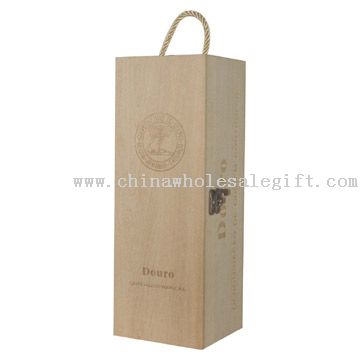
I have a design in mind that should include all the requirements above plus take into account my meager carpentry skills. I had it rolling around in my brain, but I saw an interesting example of it as I was walking by a wine store (mine won't have wine in it).

 
It will be a 2x3 frame sandwiched between two pieces of thin plywood. The top piece of plywood will be a panel that slides in. The sliding panel will act as a lid for the storage compartment, plus it will have a clip on it to hold the work down.

 
I'll make a couple if prototypes to see if:
this model is going to work, I am able to construct it, and it is cost effective. I actually don't mind spending a little more if this lapdesk is strong, fun to make, and will hold up for several years.

 
I'll let you know how things go. Even if they don't.  


Wednesday, July 20, 2011

So You Got Rid of Your Desks. NOW WHAT? (some advice)

What can you do if you want to get rid of your desks?

First, I didn't get rid of all my desks because once in a while students like an individual place to work.

Second, if you do decide to take the desks out of your classroom, don't have them removed from your school.  Put your desks in storage instead in case your experiment does not work the way you expect.  Also, if you happen to leave your school the next year, the teacher replacing you might appreciate having the desks put back in.

Third, don't remove the desks from your classroom unless you have a plan (a loose one even) of where you want kids to work.  I had my risers (below) as my alternate learning furniture, but I also have long counters by the window and sink, rolling storage trolleys with counters on top, stand up easels and bulletin boards on which to write, the floor, small group tables (some collapsible, like a card table), etc.

A lot of teachers, especially primary teachers, have no desks but tables. 
My friend K has a number of different work and sitting surfaces including choir risers, a loft bed, exercise balls, a couch, and a number of inviting places to work.  
The choir risers and tables raises an interesting opportunity: see what is already around your school.  This one teacher I saw once had some campfire benches she used in her group meeting area.  The benches were used for a school play and were just sitting in storage. 

If you do decide to go with non-traditional learning places, you will have to also think about storage and what students will write on (you know, if they have no desks).  The writing surface is the part I am rethinking right now.  I will write more about writing surfaces in future blogs as I continue to work through the process.

Sunday, July 17, 2011

You Want to Get Rid of Your Desks?

When I first started this journey about changing school through classroom design the first thing I wanted to get rid of was the desk. 
To me, the desk symbolizes everything that is wrong with education:
  • one size fits all.
  • all the information comes from the teacher.
  • you learn only by sitting down and reading or writing, etc.
  • don't move.
  • don't talk to other students.
  • do the same thing that everyone else is doing. 

Here is a picture of what desks looked like when I went to school:
The only difference to my desk and the one shown here was, there was a small round cut out for my inkwell(!), and Mrs. Young had me tie my running shoes to that really handy bar that attached the chair to the desk.  The message is pretty clear: face forward, don't move, and God help you if you are a different size of shape than one that will fit in this desk (i.e. no big kids, no little kids, no hefty kids, and definitely no kids in wheelchairs).  Did I mention that I had these exact same desks when I taught middle school only twelve years ago?  They were updated though.  They were bigger and had no inkwell hole.  The desks did not fit the mode of education twelve years ago, let alone fitting education forty years ago when I was a little kid. 

The desks of my youth are not that different from the ones from a hundred years ago.
These "sled" desks probably come from a one room school house.  These are welded together by the cast iron rail at the bottom.  I guess if you have grades 1 to 7 you probably want kids to stay in one place because it was probably dangerous for the teacher (and job security) if students were actually to learn from each other.  I wonder if they ever took their sled desks down the hill during the winter time.  It's weird that we're not better at the bobsleigh.    
The desks that used to be dominant in my current classroom kind of look like this:
I guess these are a step up.  They are adjustable for height.  The chair is not attached to the desk so there is more potential for movement.  The lack of attached seat and sled track make it so that the desks can be configured in many, many ways.  They had no inkwell hole that worked great as a drink holder or garbage chute.  Kids of different shapes, sizes and mobilities can use these desks.   

So if these desks that I have are so much better (and they are readily available), then why do I still hate them so much?

Okay, how about these ones?
The acrylic one is cool, and would make a great sneeze guard at a salad bar, but it is definitely one size fits all. Besides, privacy and Windex costs would be definite issues.


Sure, it is a creative design, but how practical is this?  It is really not that different from the desk of my youth, except that it has less storage, but a bigger place to tie my running shoes.  My latte would tip over on this design.

Is this really that different from the sled desk?  I think you can put this desk on its end and use it as a lectern, but why would you? 


My wife, also a teacher, liked these desks at SFU.  Notice that both the chairs and the tables are on wheels, so that the learning spaces are very flexible.  The room is instantly convertible.  This is great for a seminar, workshop, or even a lecture format. 

I think the thing that bothers me about all of these formats (except the SFU one) is that you won't find these types of furniture in any place except an educational institution.  These types of furniture will not be found in homes or offices or in nature.  You might ask why that is a problem because don't we want kids to associate desks with learning?  I guess that is true to an extent, but I also want kids to know that learning happens EVERYWHERE, not just in a school, not just in a desk, and not in places where you can't detach the chair from the table.

In a future post, I will talk about some of the successes and challenges I've had working in a non-desk classroom.

Monday, July 04, 2011

New Job: Good Ideas Need to Be Shared

What
So out of this whole classroom design/blog experience I've been documenting here, I have a new part time job next fall.  For one day a week, I will be a Classroom Innovation Teacher.  My main responsibilities will be to spread the word about innovations that are going on in my district, to help people develop their innovations, and to continue to explore my own innovations.  I am pretty excited about the job as I get to stay at my present school (which I love) and I get to go and see other interesting things that are happening.

How
I envision that the way I will report out about the innovations will be by a monthly district email summarizing what I see.  The email will just be a brief synopsis of the classroom innovation, but I will also post an online magazine/blog that has a fuller description with video, documents, pictures or any other artifacts I can put on line.  The email will link to the blog, and the blog will include contact information for the teachers and the ideas I profile. 

Why
When I heard about the job, I thought it was a really good idea.  Schools seem to do a good job of getting big ideas (like big projects, initiatives, or fundraising) out to the public.  But what about smaller but great ideas that might only be interesting to other teachers?  I run into people and hear about the innovative things that are happening in their classroom, and I think, "Why don't I know about this?  Why doesn't everyone know about this?"  Good ideas need to be shared, but we did not really have a mechanism for getting the ideas out to other teachers. 

I was working in a multi-district project, and I met some really fantastic teachers.  They had no idea how great they were though.  There was this one guy who really inspired me because of his passion and his clear, workable ideas.  The really sad part was that he was ready to give up on teaching because he didn't think what he was doing was any good.  He was from a smaller district so there were not a lot of opportunities for a teacher like him to work with other teachers, get feedback, or mentor less experienced teachers.  I am hoping that part of my job will be to recognize outstanding teachers like him, so they feel validated and appreciated.  I worked for the district for a few years and I saw how isolated teaching can be.  Some schools are really collaborative (like mine, and I am REALLY appreciative of it), but most are not or collaboration just happens in pockets.  And because of this isolation, some great teachers go unrecognized, and some innovations die before seeing the light of day.  Good ideas need to be shared. 

I really want to focus on individual teachers, not large groups, not district initiatives.  I want to nurture innovation and help it grow with any interested teachers.

Online Magazine
I am still thinking about how everything in this new job is going to look.  The blog, I think, will operate like magazine issues.  Some will be general issues of the magazine, but others will be focused themes: classroom design (of course), technology, assessment, project-based learning?  It depends on what is out there, I guess. 

My Innovations
I'll continue to work on my own innovations too.  I like to think of myself as innovative, but I don't know sometimes.  Sometimes I take an idea from a book or a manual, but because I am impatient, I don't read all of the instructions, so I change the idea or technique into something else.  I am also a little lazy, so sometimes I have to be creative and improvise something on the fly.  I am also somewhat opportunistic: I've been in many schools and have "borrowed" many good ideas along the way.  (Good ideas need to be shared.  So I can use them?)  And when I get praised for the great idea that I lifted from another teacher, I haven't always been quick to correct anybody.  (Sorry Mom.).  

Let's see: impatience, laziness, and opportunistic.  Hopefully, these aren't the essential seeds of innovation.  (But they've worked for me!)

Sunday, June 26, 2011

Can you teach Leadership?

There's a lot of talk about leadership.  What is it?  Who has it?  What does it take to be a leader?  etc.  Personally, I think leadership is like anything else.  We are all born with some capacity for it and some have an easier time at it than others.

But in a classroom situation, what does it look like?  Is it the same as in, say business or sports?  Probably not, as there seems to be some other element in a school situation that does not occur in business or sports; maybe because in elementary schools, there is such an emphasis on "getting along with others."  In business or sports, you do not have to be liked to be an effective leader as long as your company makes big money or your team wins the championship (e.g. several of our heads of state and a lot of NBA stars, excepting Steve Nash, of course).

Leadership is one of those things that is not listed in the curriculum, but still needs to be addressed to prepare kids for life.  So when I talk about leadership in my class, I try to give models or exemplars of different styles of leadership.
  • Sometimes it is the Best Player model.  This person is the fastest or strongest or has the best ideas.  Think Michael Jordan or Bill Gates.  Not only is Gates a great businessman, but insiders say he was the fastest and smartest programmer ever.  Sure, he has passion, but he had chops first.  In the classroom, the downside of this model for kids is that these talents seem to be God given, so they are not possible to teach, but we can still learn from their great skills.
  • What about the Grinders who lead by example?  They don't say much, but work harder than anyone. These people are my favourite types of leaders because it is just hard work, and that ethic is not God given.  In hockey, I think of Steve Yzerman or Joe Sakic.  They are quiet, passionate guys who are the first guys on the ice and the last guys off.  Sure, they have skill, but their devotion and work ethic is what sets them apart from others.  Mother Theresa is another grinder: tirelessly and thanklessly working to build a better world one person at a time.  (But her slapshot was not so good).  In the classroom, these quiet kids who stay behind to finish the project or to give their work a little extra something deserve to be recognized.
  • Another favourite leadership model of mine is the Visionary.  These people have a big idea that is so revolutionary,yet so simple that it makes people think, "That is so brilliant!  Why didn't I think of that?"  Think Steve Jobs.  Not only does he have great ideas himself (Mac, iPhone,iPad, iTunes result in iBillionaire), but he implements things in ways that other people can't see.  Xerox GAVE him the mouse and the graphical user interface (GUI) because they didn't see any potential in it!  There are pros and cons with the visionaries in the classroom.  Sometimes they have great ideas that really inspire others, but sometimes their ideas are so outlandish that everyone (including the teacher) does not understand the idea or the merit of it.
  • Unfortunately, the most prevalent style of leadership in the Boss.  Technically, this isn't even a model of leadership, but it's one that kids see all the time: the authority, the person in charge, the parent, the teacher.  I don't really need to give you examples of this model as you probably are thinking of a number of the examples you've encountered in your life.  It is a model based on power, and I guess it works somewhat in businesses, schools, or homes, but as a model for kids in a group situations, it can be brutal.  Kids get in each other's faces, trying to assert their assumed authority.  (Think of two hyenas circling a piece of meat).  Now you know why I want to supply my students with alternative models. 
  • Another interesting leadership style is the Friend.  This person makes everyone feel good, and everyone wants to have this person in their group.  They can be quiet or they can be loud, but they make sure everyone is getting along, and the group usually has fun.  Usually, they have magnetic personalities, like Oprah or Walt Disney.  On the upside, sometimes everyone feels so good that they produce amazing things.  On the downside, sometimes everyone is so busy having fun and getting along that they produce nothing.  They can be the valedictorian or the class clown.


When kids ask me what leadership is, I tell them about this last part: Leadership is the ability to get what needs to be done, done.  Sometimes you have to get in there and just work, sometimes you need to have the best ideas, and sometimes you need to be able to mobilize others.  There are so many styles, including the ones I mention here, and we all have elements of all of them.  The hard part is knowing which style to employ and when. 

Check out this great video on starting a movement.